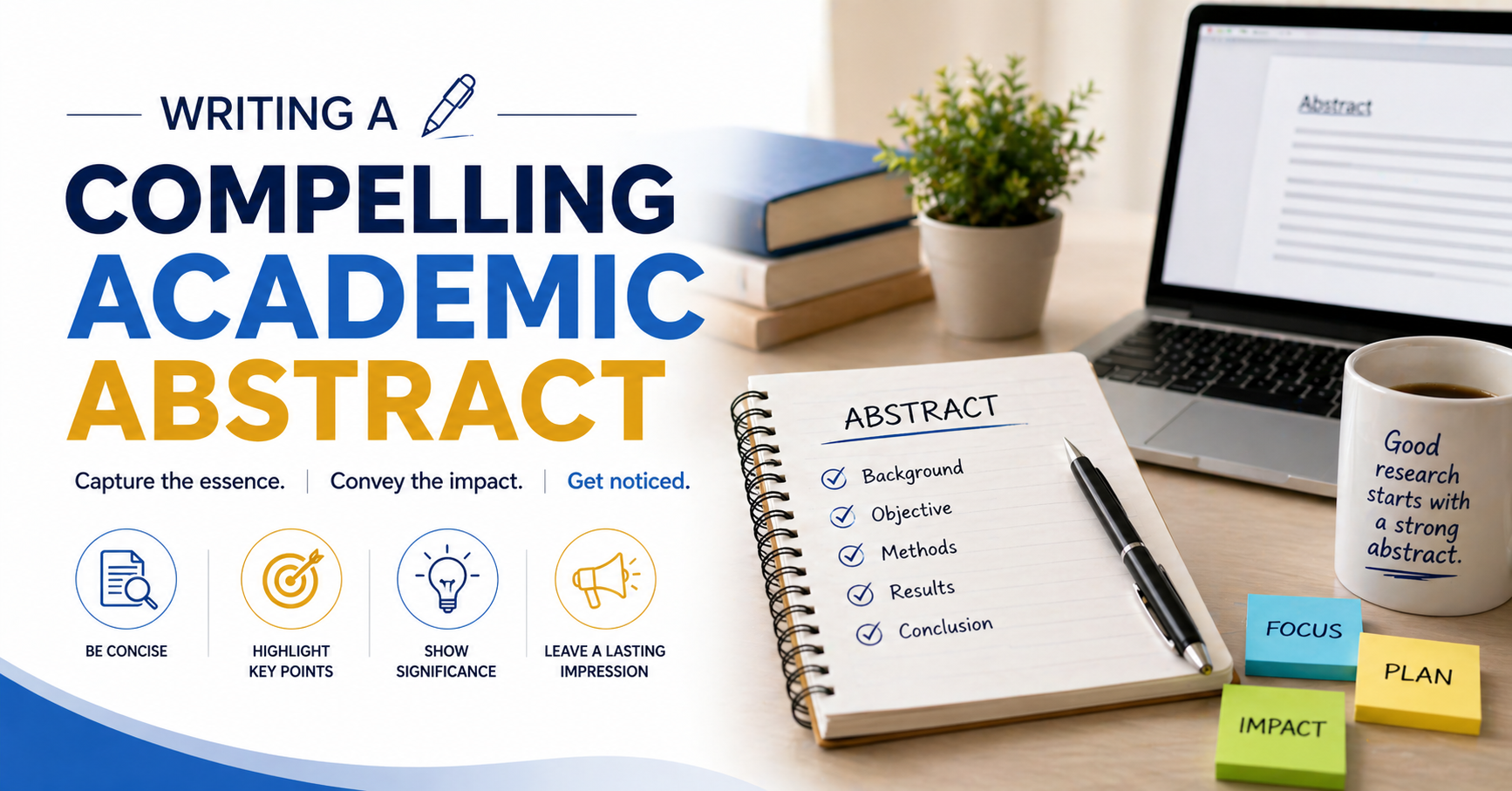
An abstract is often the only part of your paper that gets read, making it the single most important element for capturing interest and conveying your research's value. A well-crafted abstract can be the difference between a read-through and a pass-over, opening doors to citations, collaborations, and conference presentations.
Welcome to the world of academic writing, where brevity is as valued as brilliance. The academic abstract is the ultimate test of this principle. It’s a self-contained, short, and powerful statement that describes a larger work. Whether for a journal article, a thesis, or a conference submission, your abstract serves as a gatekeeper. It must be informative enough to be a substitute for the whole paper, yet concise enough to fit within strict word limits.
Many researchers, from seasoned professors to graduate students, find writing this short summary to be one of the most challenging parts of the writing process. It requires you to step back, see the big picture, and articulate your entire research project in just a few hundred words. But mastering this skill is not just a necessity; it's a strategic advantage that enhances the discoverability and impact of your work. This guide will break down the process into manageable steps, helping you write an abstract that is clear, compelling, and complete.
The Core Purpose of an Academic Abstract
Before you can write a great abstract, you must understand its function. An abstract has four primary roles. First, it helps readers decide whether to read the full paper. In an age of information overload, researchers rely on abstracts to quickly screen literature for relevance. Second, it serves as a standalone summary for databases and conference proceedings, allowing your work to be found and understood without the full text.
Third, it helps journal editors and peer reviewers get a quick, high-level overview of your contribution, framing their initial impression of your work. Finally, a well-written abstract makes your research more accessible to a broader audience, including policymakers, journalists, and practitioners who may not have time to delve into the full paper. It's your research's elevator pitch, press release, and business card all rolled into one concise package.
Think Like a Screener: Always write your abstract from the perspective of a busy researcher screening hundreds of articles. Is your core message immediately obvious? Is the relevance clear within the first two sentences?
Key Components of a Structured Abstract
A compelling abstract follows a predictable, logical structure, often mirroring the IMRaD (Introduction, Methods, Results, and Discussion) format of the paper itself. While the exact components can vary by discipline and journal requirements, a comprehensive abstract typically includes five key elements. Think of them as a checklist to ensure you’ve covered all essential information and presented a complete picture of your study.
These are: 1) Background/Introduction: A brief statement setting the context and identifying the problem or research question. 2) Methods/Approach: A concise description of your methodology or approach. 3) Results/Findings: A summary of your principal findings. 4) Conclusions/Implications: The main conclusions and what they mean. Including these ensures your abstract is comprehensive and logically sound, guiding the reader through your research journey.
Types of Abstracts: Descriptive vs. Informative
It's crucial to distinguish between the two main types of abstracts: descriptive and informative. A descriptive abstract is very short (often under 100 words) and outlines the topics covered in the paper without revealing the results or conclusions. It simply describes what the paper is *about*, acting more like a table of contents in paragraph form. This type is more common in the humanities for book-length manuscripts.
An informative abstract, by contrast, is a surrogate for the work itself. It summarizes the entire paper, including the background, methods, results, and conclusions. This is the most common type in the sciences, social sciences, and engineering, and it is what most journals and conferences require. For nearly all academic articles, you should focus on writing a detailed, informative abstract that provides a comprehensive overview of your research project from start to finish.
"I was completely stuck on my dissertation abstract. The word count felt impossible, and I couldn't figure out how to summarize three years of work. The writer from WritersHubUS not only did it perfectly but also helped me see my own research more clearly. It was a game-changer for my defense."
Our Simple 4-Step Abstract Writing Process
Polishing and Finalizing Your Abstract
Writing the abstract should be one of the final steps in your writing process, done after the main body of the paper is complete. This ensures it accurately reflects the final content. Once you have a draft, revise it ruthlessly. Check for clarity, conciseness, and completeness. Read it aloud to catch awkward phrasing. Ensure you have not introduced any information that is not present in the main paper. Finally, proofread meticulously for any grammar, spelling, or punctuation errors. A polished abstract signals a professional and carefully prepared manuscript.
The Keyword Test: Identify 5-7 crucial keywords or phrases from your paper. Now, check if they are all present in your abstract. This not only improves search engine visibility but also confirms you've covered the core concepts.
Ready to Publish with Confidence?
Let our PhD-level experts craft a compelling abstract that showcases the true value of your research.