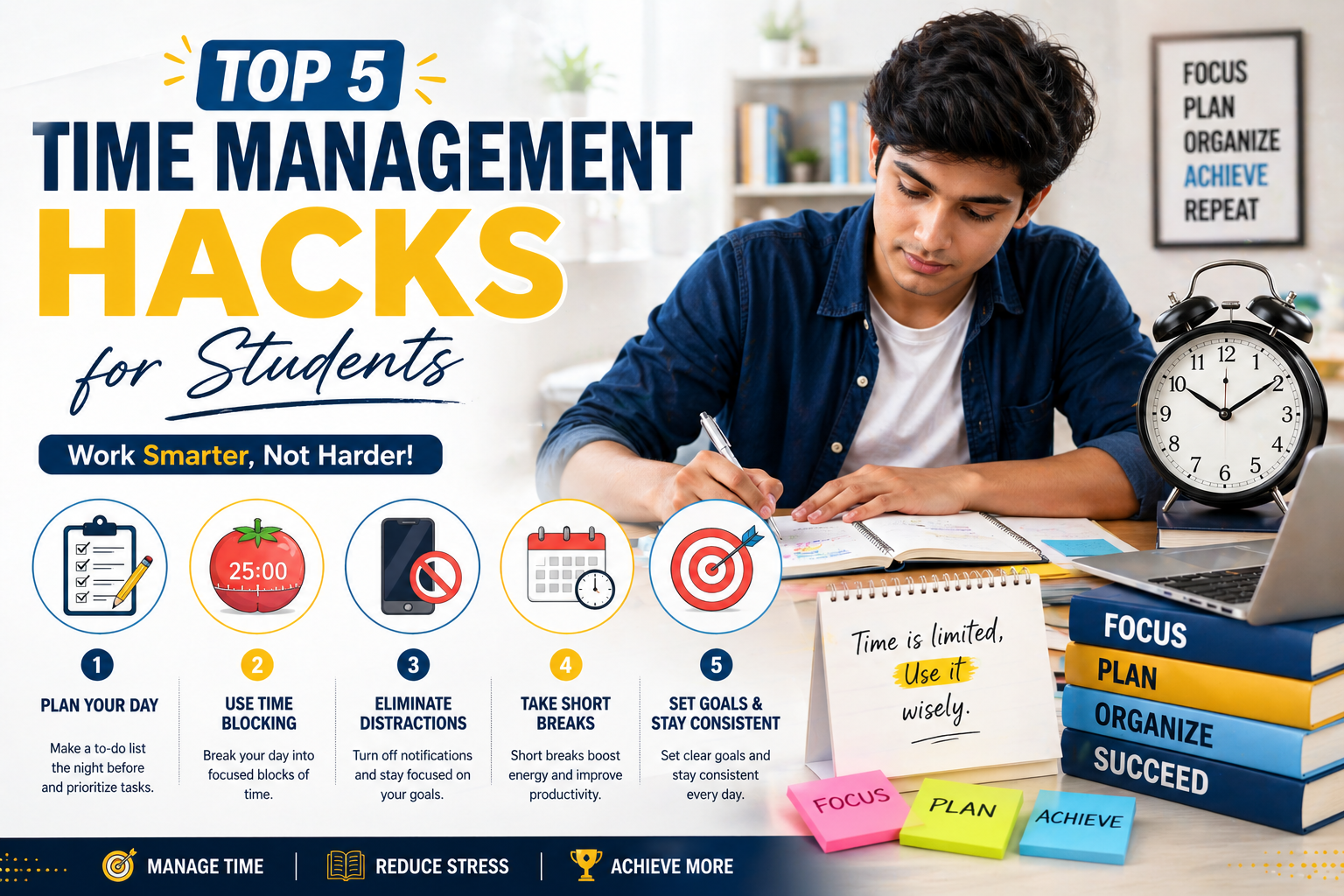
Juggling classes, assignments, a social life, and maybe even a part-time job can feel like an impossible balancing act. The key isn't finding more hours in the day, but making the most of the hours you have.
For many students, the cycle of procrastination followed by frantic, last-minute cramming is all too familiar. This leads to burnout, stress, and work that doesn't reflect your true abilities. Effective time management isn't about filling every second with work; it's about working smarter, reducing stress, and creating space for rest and activities you enjoy. The good news is that it’s a skill, and like any skill, it can be learned and mastered.
By adopting a few strategic "hacks," you can transform your relationship with time, turning it from an enemy into a powerful ally. These techniques are designed to help you focus, prioritize, and execute your tasks with greater efficiency. Whether you're overwhelmed by a packed syllabus or just looking to be more productive, integrating these methods will have a profound impact on your academic performance and overall well-being. Let's explore five of the most effective time management hacks for students.
1. The Pomodoro Technique: Focus in Bursts
Named after the Italian word for "tomato" because its inventor used a tomato-shaped kitchen timer, the Pomodoro Technique is a simple yet powerful method for maintaining intense focus. It’s perfect for tackling large, intimidating tasks like writing a term paper or studying for a final exam. The process is straightforward: you break your work down into short, timed intervals, traditionally 25 minutes long, which are separated by brief breaks.
Here’s how it works: choose a task, set a timer for 25 minutes, and work without interruption until the timer rings. Once it does, take a 5-minute break. After four "Pomodoros," you take a longer break of 15-30 minutes. This method combats mental fatigue, reduces the temptation of distractions, and makes it easier to get started on tasks you might otherwise put off. The short sprints are manageable, and the frequent breaks help your brain reset and stay fresh.
Pro Tip: Use your short breaks to do something completely unrelated to your work, like stretching, grabbing a glass of water, or looking out a window. This helps to fully reset your focus for the next interval.
2. The Eisenhower Matrix: Prioritize Like a Pro
Not all tasks are created equal. The Eisenhower Matrix, a decision-making tool popularized by President Dwight D. Eisenhower, helps you figure out what’s truly important versus what just feels urgent. It involves categorizing your tasks into a four-quadrant matrix based on their urgency and importance. This allows you to conquer the critical tasks first and avoid getting bogged down by time-wasting activities.
The quadrants are: 1) Urgent & Important (Do it now - e.g., an assignment due tomorrow), 2) Not Urgent & Important (Schedule it - e.g., research for a long-term project), 3) Urgent & Not Important (Delegate it - e.g., responding to non-critical group chat messages), and 4) Not Urgent & Not Important (Eliminate it - e.g., mindlessly scrolling social media). By sorting your to-do list into this matrix, you gain immediate clarity on where your energy should be focused for maximum impact.
3. Time Blocking: Own Your Calendar
Time blocking is the practice of scheduling out every part of your day. Instead of working from a simple to-do list, you assign a specific job to each block of time in your calendar. This means scheduling not just your classes and study sessions, but also your meals, breaks, exercise, and social time. It creates a visual roadmap for your day and week, helping you see exactly how much time you have and where it is going.
This technique is highly effective because it forces you to be realistic about what you can accomplish. By allocating a finite amount of time to a task, you’re more likely to stay focused and avoid the pitfalls of multitasking. It also protects your personal time, ensuring that your study hours don't bleed into the time you’ve set aside for relaxation and fun. Getting started is as simple as opening a digital calendar or a paper planner and blocking out your ideal day.
"I was always pulling all-nighters before big exams. Learning to time block my study sessions was a complete game-changer. I finally feel in control of my schedule and my grades have never been better."
Getting Started with a Smarter Schedule
4 & 5: Small Habits for Big Wins
Sometimes the most effective strategies are the simplest. The final two hacks are small habits that can yield enormous returns. The "2-Minute Rule" is a powerful anti-procrastination technique: if a task takes less than two minutes to complete, do it immediately. This applies to things like answering a quick email, tidying your desk, or printing a document. It clears your mental clutter and builds momentum. The second hack is a "Digital Detox." In an age of constant connectivity, distractions are the number one enemy of focus. Use app blockers or your phone’s focus modes to create sacred, notification-free blocks of time for deep work. Protecting your attention is just as important as managing your time.
Key Takeaway: The 2-Minute Rule is your secret weapon against procrastination, while a digital detox protects your valuable focus time from endless notifications and context switching.
Ready to Take Control of Your Time?
Stop letting deadlines dictate your life. Get expert academic support from WritersHubUS and free up your schedule for what truly matters.