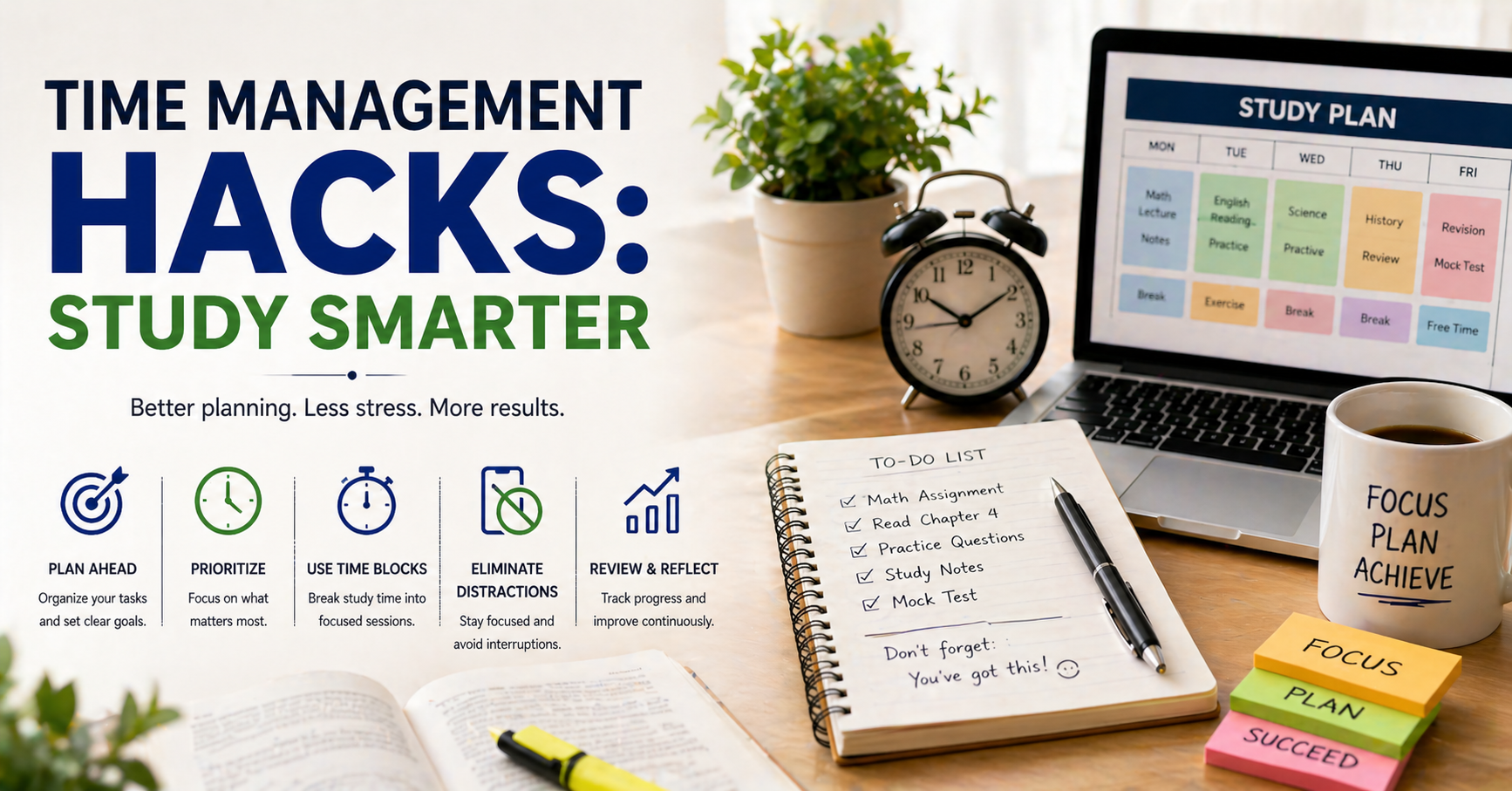
Feeling overwhelmed by a mountain of coursework and looming deadlines? You're not alone, but struggling to keep up doesn't have to be your reality.
The life of a student is a constant juggling act. Between lectures, assignments, and a semblance of a social life, it's easy to feel like you're always busy but never truly productive. The key to breaking this cycle isn't about studying longer hours; it's about studying smarter. Effective time management is the single most impactful skill you can develop to improve your academic performance and reduce stress.
Fortunately, time management is not an innate talent but a skill that can be learned and honed. By implementing a strategic approach to studying, you can take control of your schedule, eliminate procrastination, and create more space for both learning and leisure. These proven hacks will help you transform your relationship with time and unlock your full potential.
Prioritize Like a Pro: The Eisenhower Matrix
One of the biggest challenges in time management is deciding what to work on first. The Eisenhower Matrix, a simple decision-making tool, helps you distinguish between tasks that are urgent and those that are important. By categorizing your to-do list into four quadrants, you can prioritize with clarity and purpose.
For a student, this might look like: 1) Urgent & Important: Study for an exam that's tomorrow. 2) Important & Not Urgent: Begin research for a term paper due next month. 3) Urgent & Not Important: Respond to non-critical group project emails. 4) Not Urgent & Not Important: Mindlessly scrolling social media. The goal is to spend most of your time on important tasks before they become urgent.
The Golden Rule: Focus on what's important, not just what's urgent. Planning ahead for major projects prevents them from becoming last-minute emergencies that cause unnecessary stress.
Techniques for Deep Focus and Efficiency
Your ability to focus is a finite resource. To maximize it, you need proven techniques that encourage deep work and prevent burnout. The Pomodoro Technique is a popular method that involves working in focused 25-minute intervals, separated by short 5-minute breaks. This rhythm keeps your mind fresh and makes large tasks feel less daunting, as your only commitment is to focus for the next 25 minutes.
Another powerful strategy is Time Blocking. Instead of working from a simple to-do list, you schedule specific "blocks" of time for each task directly onto your calendar. For example, you might block out 2:00-3:30 PM for "History reading" and 4:00-5:00 PM for "Drafting English essay outline." This method creates a concrete plan for your day, reduces decision fatigue about what to do next, and ensures your priorities get the attention they deserve.
The Power of a Digital-Free Study Zone
In today's world, the biggest threat to focus is the constant barrage of digital distractions. Every notification, text, or social media alert pulls you out of your study flow, and the mental cost of switching back and forth is enormous. Protecting your attention is paramount for productive learning, which requires creating an environment conducive to concentration.
Commit to creating a digital-free study zone. This means putting your phone on silent and out of sight—not just face down on the desk. Use browser extensions or apps that block distracting websites for set periods. The simple act of creating a physical space dedicated solely to studying, free from the temptations of entertainment and social media, signals to your brain that it's time to focus.
"I was always studying but my grades weren't showing it. Learning to time block and use the Pomodoro Technique was a total game-changer. I finally feel in control of my schedule and my stress levels are way down."
Get Your Time Back in 4 Simple Steps
Plan Your Week, Win Your Week
While daily planning is crucial, a weekly review session provides the high-level perspective needed to stay on track with long-term goals. This practice involves looking ahead at your upcoming assignments, exams, and personal commitments to create a balanced and realistic plan. It allows you to allocate time for major projects, anticipate potential conflicts, and ensure you’re making consistent progress without feeling overwhelmed by last-minute surprises.
Pro-Tip for Success: Dedicate 30 minutes every Sunday to map out your upcoming week. This small investment pays huge dividends in clarity and reduced stress throughout the week.
Ready to Reclaim Your Time?
Let our expert writers handle the heavy lifting so you can focus on studying smarter, not harder.