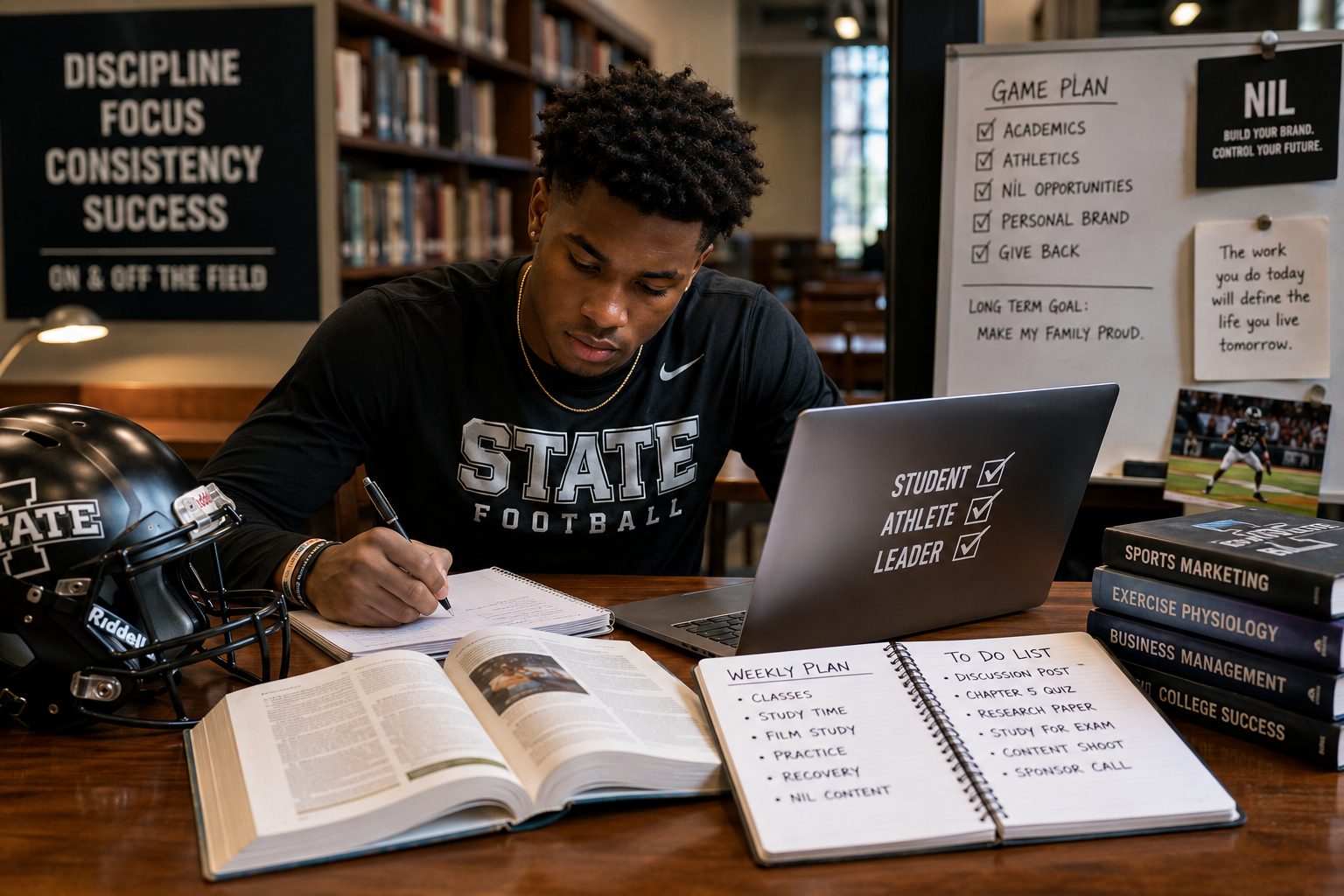
The Student-Athlete Survival Guide: Balancing Sports, Classes, and NIL Deals
Success as a student-athlete is no longer just about winning games. Today's athletes must balance academics, athletic performance, and NIL opportunities while preparing for life beyond sports.
8 MIN READ | 7 SECTIONS | 5 FAQS
Athletics | Academics | NIL Opportunities |
|---|---|---|
Practice & Competition | Assignments & Exams | Brand Partnerships |
Travel & Recovery | GPA Requirements | Content Creation |
Team Meetings | Class Attendance | Business Management |
The life of a student-athlete has changed dramatically. In previous generations, athletes focused primarily on sports and academics. Today, many student-athletes are also building personal brands, managing sponsorships, creating content, and exploring Name, Image, and Likeness (NIL) opportunities.
While these opportunities create exciting possibilities, they also create new challenges. Athletes must now manage demanding schedules that often leave little room for mistakes. Without structure and planning, even talented athletes can struggle academically or become overwhelmed by competing responsibilities.
This guide explores practical strategies that help student-athletes stay eligible, manage their time effectively, and succeed both on and off the field.
The Modern Student-Athlete Challenge
Today's student-athlete faces a unique combination of responsibilities. A typical week may include early morning workouts, classes, team meetings, film study, strength training, travel, assignments, exams, recovery sessions, and NIL commitments.
For many athletes, these responsibilities can feel like managing multiple full-time jobs simultaneously.
The Three Areas Competing for Time
Most student-athletes are constantly balancing three priorities:
Athletic performance
Academic success
Personal brand and NIL growth
Each area is important, but all three require significant attention and discipline.
The Core Principle: Student-athletes succeed when they build systems that allow academics, athletics, and NIL opportunities to work together rather than compete against one another.
Why Student-Athletes Struggle Academically
Many people assume academic struggles happen because athletes are not committed to school. In reality, the challenge is often related to workload management and scheduling conflicts.
Limited Study Time
Unlike traditional students, athletes often have structured athletic commitments that consume large portions of their day. Long practices, travel schedules, and recovery sessions reduce available study time.
Mental Fatigue
Physical training demands significant energy. After intense practices or competitions, concentration and motivation can decline, making academic tasks more difficult.
Travel Responsibilities
Travel for games and competitions often disrupts study schedules. Missing classes and adjusting to changing environments can create additional academic pressure.
Procrastination Under Pressure
When athletic responsibilities feel urgent, academic work may be delayed. Unfortunately, deadlines continue approaching regardless of practice schedules.
The Anatomy of Successful Student-Athlete Time Management
The most successful student-athletes approach academics the same way they approach sports. They rely on preparation, discipline, and consistency.
Schedule Everything
Top performers schedule every important responsibility, including:
Classes
Study sessions
Assignment deadlines
Practice times
Recovery periods
NIL content creation
Focus on High-Impact Tasks
Not all assignments carry equal weight. Student-athletes should prioritize exams, major projects, and assignments that have the greatest impact on their grades.
Use Small Blocks of Time
Many athletes underestimate the value of short study sessions. Reading assignments during travel, reviewing notes between classes, or completing discussion posts during downtime can create significant academic progress.
Bad Way: Waiting for a free afternoon to start studying.
Pro Way: Using multiple 30-minute study blocks throughout the week.
NIL Opportunities: Opportunity or Distraction?
NIL has transformed college athletics by allowing athletes to benefit from their personal brands. Athletes can now secure sponsorships, build audiences, and generate income while competing.
However, NIL success requires responsibility.
Common NIL Mistakes
Accepting too many sponsorship opportunities
Missing academic deadlines because of content creation
Overcommitting to promotional activities
Failing to manage schedules effectively
The Smart NIL Approach
The most successful athletes understand that NIL opportunities should complement—not replace—their academic goals.
A strong educational foundation remains valuable long after an athletic career ends.
A 4-Step Academic Survival Roadmap
Step 1: Build a Semester Blueprint
At the start of every semester, collect course syllabi, identify major assignments, record exam dates, and map travel schedules.
Step 2: Conduct Weekly Reviews
Spend time each week reviewing upcoming deadlines, athletic commitments, and NIL responsibilities. Weekly planning reduces surprises.
Step 3: Communicate Early
If travel or competition will affect coursework, communicate with professors and advisors as early as possible.
Step 4: Build a Support System
Successful athletes rarely operate alone. Academic advisors, tutors, mentors, coaches, and support services can provide accountability and guidance.
💡 Pro-Tip for 2026: Treat your academic calendar like a game schedule. If it matters enough to compete for, it matters enough to schedule.
The Hidden Benefits of Academic Excellence
Academic success provides benefits that extend far beyond the classroom.
Leadership Development
Managing academic responsibilities develops accountability and leadership skills that transfer to sports and professional careers.
Communication Skills
Strong writing and communication skills improve relationships with coaches, teammates, brands, and future employers.
Career Flexibility
Even elite athletes benefit from having educational credentials and professional opportunities available after their playing careers.
Personal Confidence
Knowing that you can succeed academically and athletically builds confidence and resilience.
A Real-World Student-Athlete Scenario
Consider a college football player enrolled in four classes while maintaining practice schedules, team meetings, travel obligations, and two NIL partnerships.
Without planning, assignments begin to accumulate. Deadlines become stressful. Sleep decreases. Performance suffers.
Now imagine the same athlete operating with a semester plan, weekly review system, study schedule, and academic support structure.
The workload remains demanding, but it becomes manageable because the athlete has a system.
"The difference between overwhelmed athletes and successful athletes is often organization, not talent."
How Student-Athlete Academic Support Creates an Advantage
Student-athlete academic support is designed to help athletes remain organized and focused while managing demanding schedules.
Support can assist with:
Course planning
Assignment management
Time management strategies
Research organization
Academic accountability
Semester-long workload management
For athletes balancing classes, sports, and NIL commitments, structured support can reduce stress and improve consistency.
Frequently Asked Questions (FAQs)
Can student-athletes participate in NIL opportunities and remain eligible?
Yes. Athletes can participate in NIL activities while maintaining eligibility, provided they follow institutional, conference, and applicable regulations.
What is the biggest challenge student-athletes face?
Time management remains one of the most common challenges because athletes must balance academic, athletic, and personal responsibilities.
How can athletes avoid falling behind academically?
Planning ahead, maintaining a structured schedule, and seeking support early can significantly reduce academic challenges.
Why is academic support important for athletes?
Academic support helps athletes stay organized, manage deadlines, and maintain focus during demanding athletic seasons.
Can academic success improve athletic performance?
Yes. Strong academic habits often improve discipline, organization, confidence, and overall performance both on and off the field.
Final Thoughts
The modern student-athlete faces more responsibilities than ever before. Balancing academics, athletics, and NIL opportunities requires discipline, planning, and support.
The athletes who thrive are not necessarily those with the most talent. They are the ones who build systems, manage their time effectively, and stay committed to long-term success.
When academics, athletics, and NIL opportunities are aligned, student-athletes position themselves for success both during college and beyond graduation.
Need expert student-athlete academic support? WritersHub USA Solutions Limited helps student-athletes stay organized, manage coursework, and maintain academic momentum throughout the semester. Learn more today.