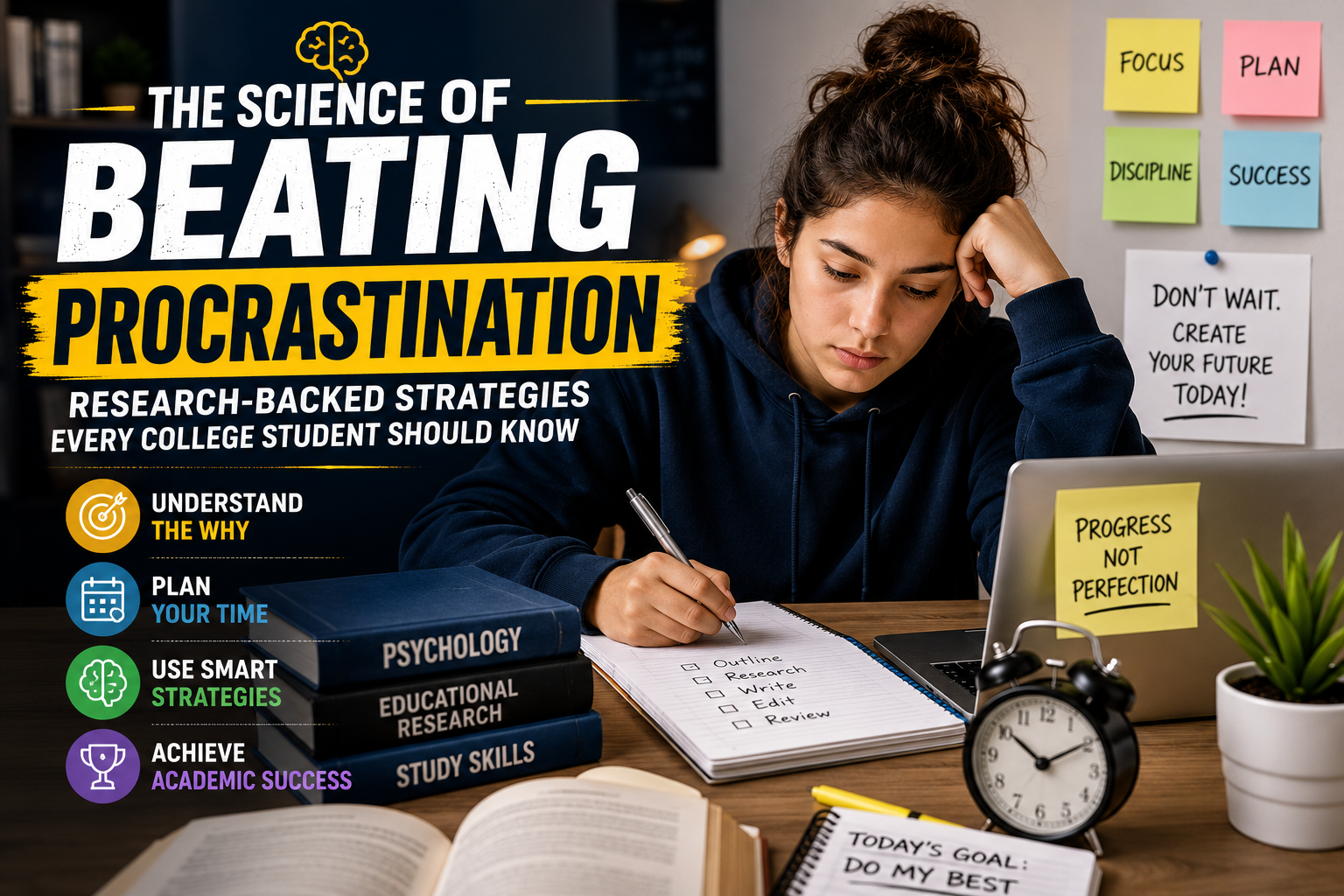
The Science of Beating Procrastination: Research-Backed Strategies Every College Student Should Know
Nearly every college student has procrastinated at some point. Whether it's putting off an essay until the night before it's due, delaying exam preparation, or avoiding a challenging research project, procrastination has become one of the biggest barriers to academic success. While many people view procrastination as poor time management, research shows it's much more complex. It is often driven by emotions such as stress, fear of failure, perfectionism, and lack of motivation.
The good news is that procrastination is a habit—not a personality trait. By understanding the science behind why we procrastinate, students can develop healthier study habits, improve productivity, and reduce academic stress. This guide explores what research says about procrastination and provides practical strategies that help students take control of their academic responsibilities.
What Is Procrastination?
Procrastination is the intentional delay of completing important tasks despite knowing there may be negative consequences. Instead of working on assignments, students often choose activities that provide immediate satisfaction, such as scrolling through social media, watching videos, or spending time with friends.
Researchers have found that procrastination is closely linked to emotional regulation. Rather than avoiding the work itself, people often avoid the uncomfortable emotions associated with beginning difficult tasks. These emotions may include anxiety, self-doubt, boredom, or fear of making mistakes.
Why Do College Students Procrastinate?
Several psychological and environmental factors contribute to procrastination. Understanding these causes is the first step toward overcoming them.
Fear of Failure
Many students delay assignments because they worry their work will not meet expectations. Ironically, waiting until the last minute often increases the likelihood of poor performance.
Perfectionism
Perfectionists often believe every assignment must be flawless. This unrealistic expectation creates pressure that makes starting the task feel overwhelming.
Lack of Motivation
Assignments that appear difficult, repetitive, or unrelated to personal interests often receive lower priority than activities offering immediate enjoyment.
Poor Time Management
Without a structured schedule, students underestimate how long assignments will take, resulting in rushed work and unnecessary stress.
How Procrastination Affects Academic Performance
Procrastination has consequences beyond missing deadlines. Research links chronic procrastination to increased stress, lower academic achievement, reduced learning, and poorer mental health.
Lower assignment quality.
Higher anxiety levels.
Reduced exam performance.
Sleep deprivation.
Increased academic burnout.
Lower confidence.
Students who consistently delay important tasks often experience greater emotional exhaustion throughout the semester.
The Psychology Behind Procrastination
Psychologists explain procrastination using the concept of present bias. The brain naturally favors immediate rewards over future benefits. Watching one episode of a favorite television show feels rewarding today, while earning a better grade seems distant and abstract.
This imbalance encourages short-term pleasure instead of long-term success. Learning to recognize this mental tendency helps students make better academic decisions.
Research-Backed Strategies to Beat Procrastination
Break Large Assignments into Smaller Tasks
Large projects often appear overwhelming. Dividing them into smaller, manageable steps makes them easier to begin and reduces anxiety.
Instead of writing "Complete research paper," create tasks such as:
Choose a topic.
Find five scholarly sources.
Create an outline.
Write the introduction.
Edit the final draft.
Use the Pomodoro Technique
The Pomodoro Technique involves working for 25 minutes followed by a five-minute break. After completing four sessions, take a longer break. This method improves concentration while preventing mental fatigue.
Set Realistic Daily Goals
Rather than planning to study for six consecutive hours, commit to completing one chapter or finishing one assignment section each day. Small achievements build momentum.
Eliminate Distractions
Create a study environment free from unnecessary interruptions. Turn off phone notifications, close unrelated browser tabs, and study in quiet locations whenever possible.
Build Better Study Habits
Successful students develop routines that reduce the temptation to procrastinate. Studying at the same time each day trains the brain to expect focused work.
Helpful habits include:
Review notes after every class.
Complete assignments early.
Use digital calendars.
Create weekly study schedules.
Track assignment deadlines.
Reward yourself after completing important tasks.
How Technology Can Help
Technology often causes procrastination, but it can also become a powerful productivity tool.
Google Calendar for scheduling.
Notion for organizing coursework.
Todoist for task management.
Forest for reducing phone distractions.
Grammarly for proofreading assignments.
Quizlet for reviewing course material.
The Importance of Self-Compassion
Many students become frustrated after procrastinating, leading to guilt and negative self-talk. Research suggests that practicing self-compassion encourages healthier behavior change than self-criticism.
Instead of focusing on past mistakes, concentrate on taking the next productive step. Every assignment completed today strengthens future study habits.
Create an Anti-Procrastination Routine
An effective daily routine might include:
Review your schedule each morning.
Identify your three most important academic tasks.
Complete the hardest task first.
Study using focused work sessions.
Take regular breaks.
Review your accomplishments before ending the day.
Following a consistent routine reduces decision fatigue and improves productivity throughout the semester.
When to Seek Additional Help
If procrastination consistently affects your grades, mental health, or overall well-being, consider seeking support from academic advisors, learning specialists, counseling services, or tutoring centers. Asking for help early can prevent small academic challenges from becoming larger obstacles.
Final Thoughts
Procrastination is one of the most common challenges facing college students, but it does not have to define your academic journey. Understanding the psychological causes behind procrastination allows you to replace unhealthy habits with productive routines that support long-term success.
Remember that progress is more important than perfection. Completing one small task today is far better than waiting for the perfect moment to begin. By using research-backed strategies such as structured scheduling, focused study sessions, distraction management, and realistic goal setting, you can overcome procrastination and achieve greater confidence in your academic abilities.
Need help meeting assignment deadlines? WritersHubUS provides professional academic writing assistance, editing, proofreading, research support, and study guidance to help students stay ahead of deadlines and achieve academic success. Visit www.writershubusa.com to learn more.