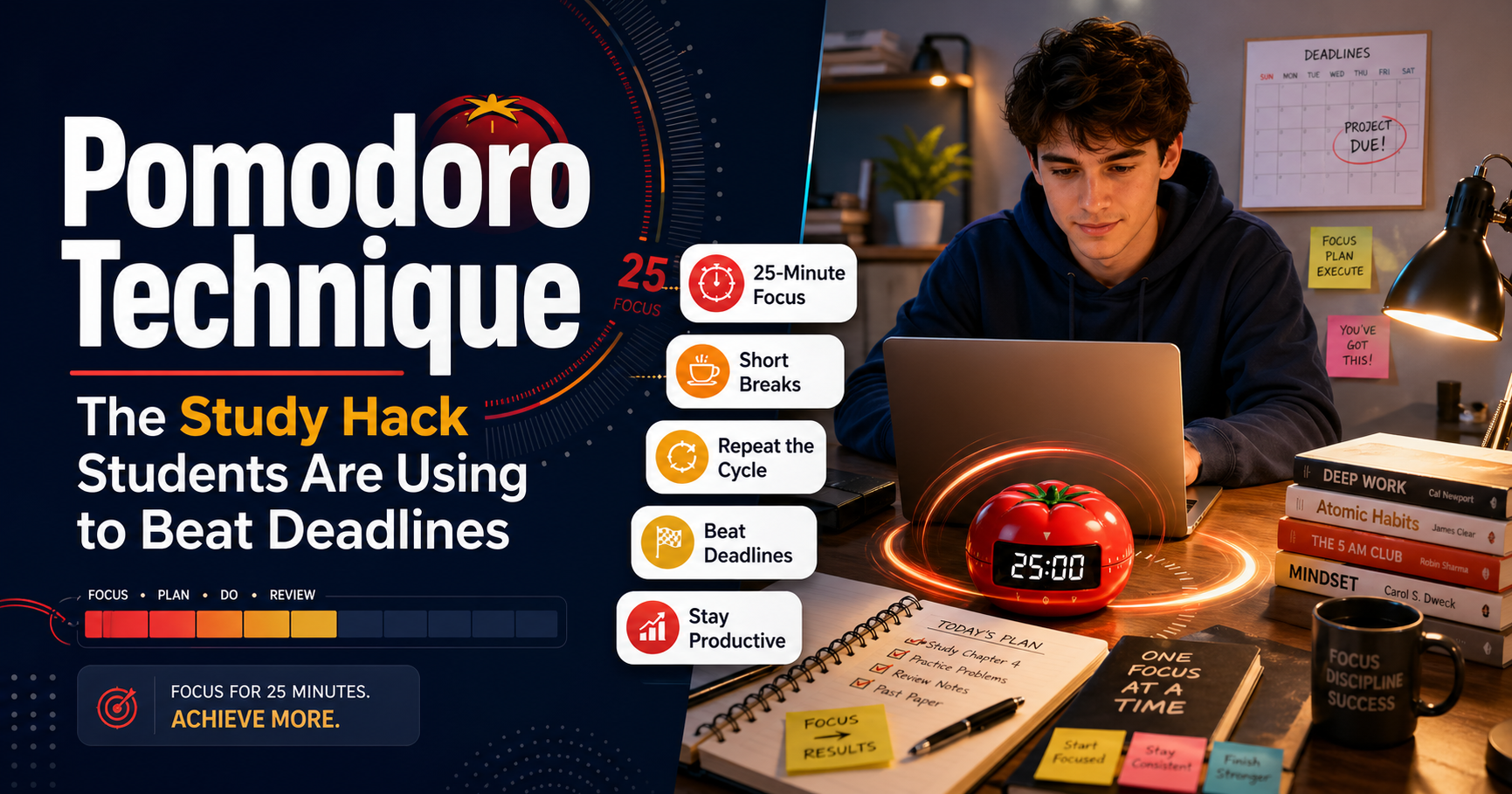
Managing assignments, exams, and deadlines can quickly become overwhelming for students. Long study hours often lead to burnout, distraction, and low productivity rather than real progress.
To solve this, many students are turning to structured study methods that improve focus without increasing pressure. One of the most effective methods is the Pomodoro Technique.
This approach is simple, practical, and designed to help students stay consistent while completing academic work efficiently.
What Is the Pomodoro Technique
The Pomodoro Technique is a time management method that breaks study sessions into short, focused intervals followed by short breaks.
The standard structure is:
25 minutes of focused work
5-minute break
Repeat this cycle four times
Take a longer break after completing four sessions
This method allows students to maintain concentration while avoiding mental fatigue.
Why the Pomodoro Technique Works
Improves Focus
Short, timed sessions help reduce distractions. Knowing there is a clear start and end point makes it easier to stay fully engaged.
Reduces Procrastination
Large tasks can feel overwhelming. Breaking them into smaller sessions makes it easier to begin and maintain momentum.
Prevents Burnout
Regular breaks allow the brain to recover, making it possible to stay productive for longer periods without exhaustion.
Increases Productivity
Focused work sessions lead to better results in less time compared to long, unfocused study hours.
How to Use the Pomodoro Technique for Academic Work
Step 1
Select a specific task such as writing an essay or completing an assignment
Step 2
Set a timer for 25 minutes
Step 3
Work with full focus until the timer ends
Step 4
Take a 5-minute break
Step 5
Repeat the process and take a longer break after four sessions
This method works best when distractions are minimized and the focus is intentional.
When to Use the Pomodoro Technique
The Pomodoro Technique is most effective for structured academic tasks such as:
Essays and written assignments
Homework and coursework
Exam revision
Reading and note-taking
It is particularly useful when managing tight deadlines and multiple responsibilities.
Limitations to Consider
While effective, the Pomodoro Technique may not suit every type of task.
Activities that require deep concentration or extended problem-solving may benefit from longer, uninterrupted sessions. Adjusting the time intervals based on the task is recommended.
A Smarter Approach to Academic Performance
Study techniques like the Pomodoro Technique improve focus, but they do not eliminate the pressure of multiple assignments and deadlines.
Students balancing coursework, exams, and other responsibilities often need more than just time management strategies. They need a structured system that ensures consistency and reliability across all academic tasks.
Conclusion
The Pomodoro Technique remains one of the most effective study methods for improving focus, reducing procrastination, and managing academic workloads.
By breaking tasks into manageable sessions, students can maintain consistency and complete work more efficiently.
Long-term success comes from combining effective study methods with a structured approach to managing academic responsibilities.
Call to Action
If staying on top of assignments and deadlines is becoming challenging, the right system can make all the difference.
Focus on your priorities while ensuring everything else is handled with precision and consistency.