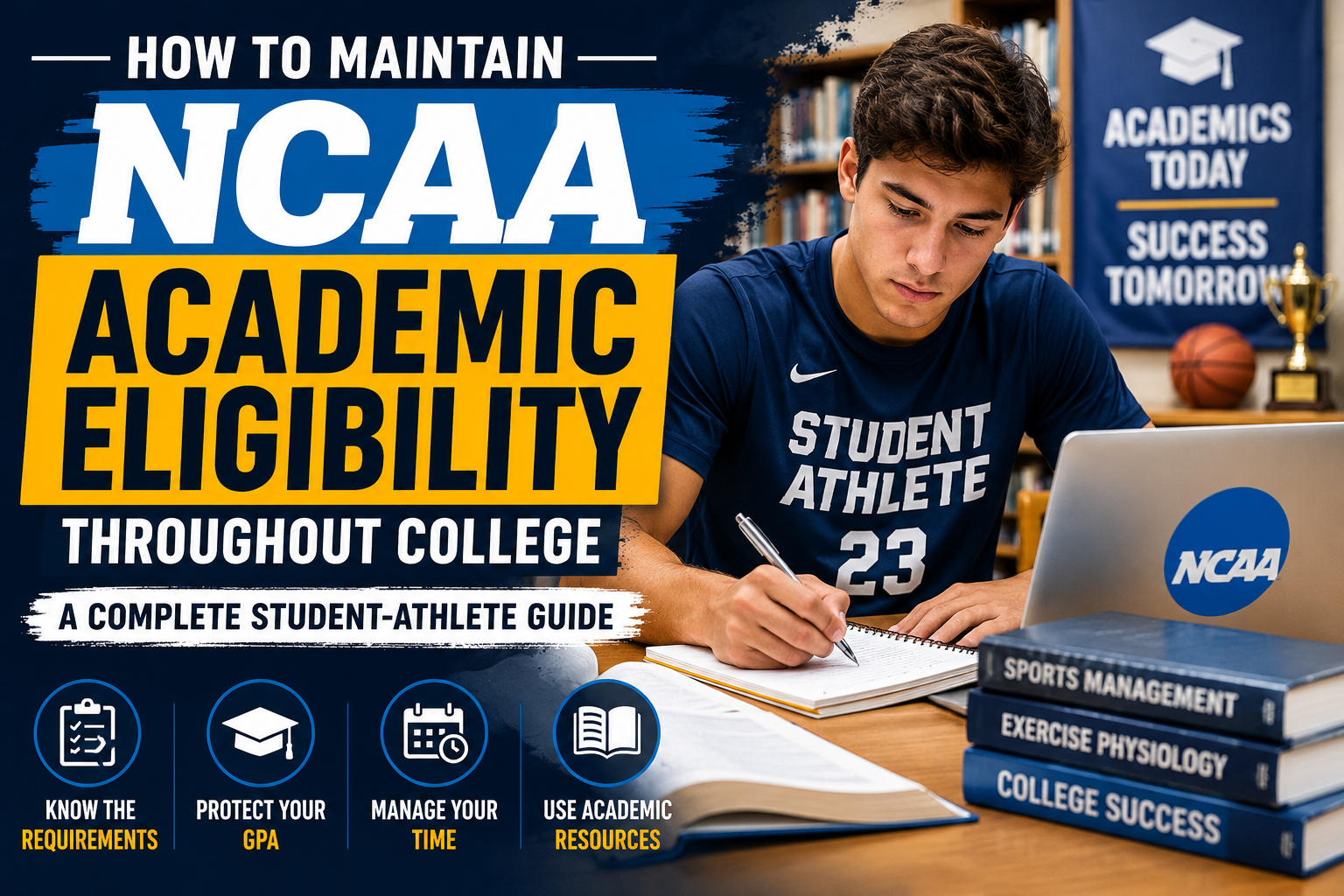
How to Maintain NCAA Academic Eligibility Throughout College: A Complete Student-Athlete Guide
Success as a college athlete begins long before stepping onto the field, court, track, or pool. While athletic talent earns opportunities, academic performance determines whether those opportunities continue throughout your college career. Every NCAA student-athlete is expected to make consistent progress toward earning a degree while balancing practices, competitions, travel, and personal responsibilities.
Maintaining NCAA academic eligibility can feel challenging, especially during busy seasons when assignments, exams, and athletic commitments compete for your attention. However, thousands of student-athletes graduate successfully every year because they develop strong study habits, stay organized, and make full use of the academic resources available on campus.
This guide explains what NCAA academic eligibility means, why it matters, common challenges student-athletes face, and practical strategies that can help you remain eligible throughout college while achieving success both academically and athletically.
What Is NCAA Academic Eligibility?
NCAA academic eligibility refers to the academic standards student-athletes must meet to practice, compete, and continue progressing through their collegiate athletic careers. These standards encourage athletes to remain committed to earning their degrees while participating in intercollegiate sports.
Academic eligibility generally includes maintaining satisfactory progress toward graduation, completing required credit hours, and meeting institutional and NCAA academic expectations. Although specific requirements vary depending on division and institution, the overall goal remains the same: ensuring that student-athletes succeed in the classroom as well as in competition.
Why Academic Eligibility Matters
Academic eligibility affects nearly every aspect of a student-athlete's college experience. Losing eligibility may prevent participation in games, tournaments, championships, and team travel. It can also affect scholarship opportunities and delay graduation.
Remaining academically eligible provides several important benefits:
Continued participation in NCAA competition.
Steady progress toward graduation.
Greater scholarship security.
Improved career opportunities after college.
Development of discipline and leadership skills.
Challenges Student-Athletes Face
Unlike traditional college students, student-athletes manage demanding schedules that require exceptional organization. Daily practices, strength training, travel, competitions, recovery sessions, and team meetings leave limited time for studying.
Common academic challenges include missed classes due to travel, assignment deadlines during competition season, physical fatigue, stress, and balancing personal responsibilities alongside athletics.
Create an Effective Weekly Schedule
Time management is one of the most valuable skills any student-athlete can develop. Successful athletes schedule study sessions just as carefully as they schedule practices.
A balanced weekly calendar should include:
Class schedules.
Practice sessions.
Study blocks.
Assignment deadlines.
Recovery time.
Meals.
Sleep.
Personal activities.
Planning your week in advance helps prevent last-minute stress and improves productivity.
Prioritize Class Attendance
Attending lectures consistently improves understanding of course material and strengthens relationships with professors. When athletic travel requires missing classes, notify instructors early and request assignments before leaving campus whenever possible.
Taking responsibility for missed coursework demonstrates professionalism and helps maintain academic progress throughout the season.
Use Academic Support Resources
Most NCAA institutions provide specialized academic support services for student-athletes. These programs are designed to help athletes balance demanding schedules while maintaining strong academic performance.
Academic advising
Tutoring programs
Writing centers
Study halls
Learning specialists
Career counseling
Library research assistance
Seeking help early often prevents minor academic difficulties from becoming larger problems.
Build Strong Study Habits
Consistent studying is more effective than last-minute cramming. Successful student-athletes review notes daily, complete assignments ahead of schedule, and break larger projects into manageable tasks.
Setting realistic daily academic goals helps reduce stress while improving long-term retention of course material.
Communicate With Professors
Open communication is essential when balancing athletics and academics. Inform professors about official travel schedules, ask questions during office hours, and clarify assignment expectations before deadlines approach.
Most instructors appreciate students who communicate proactively and demonstrate responsibility.
Protect Your GPA
Your GPA reflects consistent academic performance throughout college. Protecting it requires attending class regularly, completing assignments on time, participating in study groups, and asking for help whenever necessary.
Small improvements made every week contribute significantly to long-term academic success.
Take Care of Your Physical and Mental Health
Academic performance depends heavily on physical and mental well-being. Student-athletes should prioritize quality sleep, balanced nutrition, hydration, and recovery. Managing stress through healthy routines also improves concentration and decision-making.
Remember that asking for support from coaches, counselors, teammates, or academic advisors demonstrates strength rather than weakness.
Technology That Supports Academic Success
Digital tools can simplify organization and improve productivity throughout the semester.
Google Calendar
Microsoft OneNote
Google Drive
Quizlet
Notion
Grammarly
Using these applications consistently helps student-athletes stay organized while balancing demanding schedules.
Common Mistakes That Threaten Eligibility
Skipping classes.
Ignoring assignment deadlines.
Poor communication with professors.
Waiting too long to seek tutoring.
Poor time management.
Lack of sleep.
Trying to handle every challenge alone.
Final Thoughts
Maintaining NCAA academic eligibility requires dedication, planning, and consistent effort. Athletic success and academic achievement are not competing goals—they complement one another. Student-athletes who build effective study habits, communicate openly, and use available campus resources position themselves for long-term success both during college and after graduation.
Your athletic career may last only a few years, but your education will continue creating opportunities for decades. Prioritizing academics today ensures that you remain eligible tomorrow while building the knowledge and skills needed for future success.