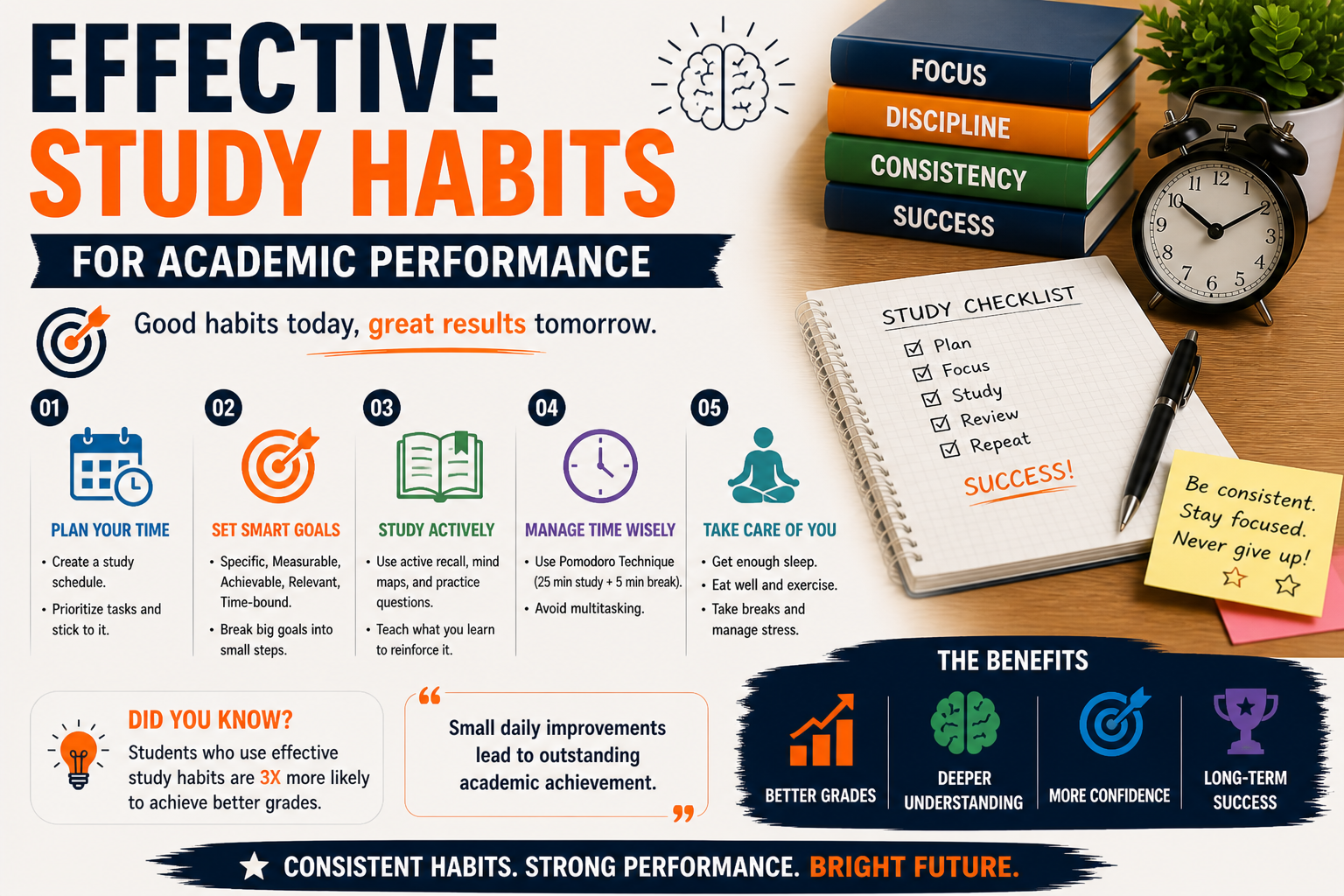
STUDY SMARTER
Effective Study Habits for Peak Academic Performance
Move beyond last-minute cramming and build sustainable strategies for academic excellence and long-term knowledge retention.
Feeling overwhelmed by coursework and endless reading? The key to academic success isn’t about studying longer, but studying smarter with proven techniques that enhance retention and understanding.
In the pursuit of academic excellence, many students fall into the trap of passive learning—highlighting textbooks, rereading notes, and hoping the information sticks. While these methods feel productive, they often lead to burnout and disappointing results. True peak performance comes from adopting active, strategic study habits that engage your brain, build strong neural connections, and make learning more efficient and effective.
This guide will walk you through foundational, evidence-based strategies that can transform your study routine. From structuring your environment to leveraging powerful cognitive techniques, these habits will help you not only achieve higher grades but also cultivate a deeper, more lasting understanding of your subjects. By implementing these methods, you can unlock your full academic potential and approach your studies with renewed confidence.
40%
Higher retention from active recall
2X
More effective than rereading
8/10
Students improve with structured plans
1. Create a Structured Study Environment
Your physical surroundings play a crucial role in your ability to concentrate. An effective study space is more than just a desk; it’s a distraction-free zone engineered for focus. Designate a specific area solely for your academic work. This trains your brain to switch into "study mode" whenever you’re there. Keep it organized, well-lit, and free of clutter. Remove potential distractions like your phone (or put it on silent and out of reach), turn off notifications on your computer, and let roommates or family know you need uninterrupted time.
Equally important is a structured schedule. Consistency is key. Instead of cramming, schedule shorter, regular study sessions. This approach, known as distributed practice, is proven to be far more effective for long-term memory. Use a planner or digital calendar to block out specific times for studying, and be sure to include short breaks to rest and recharge. This prevents mental fatigue and keeps you sharp and motivated.
Master Time Management: Use the Pomodoro Technique to break study sessions into focused 25-minute intervals separated by 5-minute breaks. This simple method enhances concentration and prevents burnout.
Struggling to Focus?
Our academic experts can help you build a personalized study plan.
2. Embrace Active Recall and Spaced Repetition
If you change only one thing about how you study, let it be this: switch from passive review to active recall. Active recall is the process of actively retrieving information from your memory, rather than simply rereading it. This "mental workout" strengthens the neural pathways associated with that memory, making it easier to recall in the future. Instead of highlighting, close the book and try to summarize the key concepts in your own words. Use flashcards (digital or physical), create practice tests, or explain the topic to a friend.
Combine active recall with spaced repetition for maximum effect. This technique involves reviewing information at increasing intervals over time. For example, you might review a concept after one day, then after three days, then a week, and so on. This process interrupts the natural forgetting curve and signals to your brain that this information is important and should be moved into long-term memory. Numerous apps, like Anki or Quizlet, are built around this powerful principle, making it easy to implement.
✓
Boost Retention
Active recall strengthens neural pathways for long-term memory.
⏱
Optimize Time
Spaced repetition prevents last-minute cramming and reduces study hours.
✦
Deeper Understanding
Move beyond rote memorization to achieve true comprehension.
✎
Track Your Progress
Regularly test yourself to identify and address weak spots early.
3. Use Interleaving to Sharpen Problem-Solving
While it’s common to study one topic exhaustively before moving to the next (known as "blocking"), research shows that mixing, or interleaving, different but related topics within a single study session can lead to better long-term retention and improved problem-solving skills. For a math class, this might mean working on problems from different chapters in one session, rather than doing all problems from Chapter 1, then all from Chapter 2.
Interleaving forces your brain to constantly retrieve different concepts and strategies, which can feel more difficult in the short term but builds a more flexible and robust understanding. This practice helps you learn how to differentiate between concepts and decide which strategy to apply, a critical skill for exams. Rather than just executing a known procedure, you learn to recognize context and make connections between ideas.
"I was always a 'cram-the-night-before' student. Learning about active recall from WritersHubUS completely changed my approach. My grades are up, and my stress levels are way down."
Brian, University Student
Ready to Transform Your Grades?
Connect with a subject matter expert in minutes.
How It Works
1
Tell Us Your Needs
Briefly describe your subject, topic, and academic challenges.
2
Get Matched with an Expert
We connect you with a qualified writer skilled in your area of study.
3
Collaborate and Learn
Work with your expert to build skills and master complex topics.
4
Achieve Your Goals
Apply what you've learned and submit your work with confidence.
4. Prioritize Physical and Mental Well-being
Effective study habits are not just about what you do at your desk; they also depend on a healthy lifestyle. A tired, stressed, or poorly nourished brain cannot learn optimally. Sleep is arguably the most critical component. During sleep, your brain consolidates memories, transferring information from short-term to long-term storage. Sacrificing sleep for extra study time is counterproductive and undermines the very learning you’re trying to achieve. Aim for 7-9 hours of quality sleep per night.
Don't Neglect Rest: Studies overwhelmingly show that adequate sleep is crucial for memory consolidation, the neurobiological process by which the brain solidifies and strengthens new memories for long-term storage.
Unlock Your Full Academic Potential
Stop struggling and start succeeding with personalized guidance from our top-tier academic experts.