STUDENT LIFE
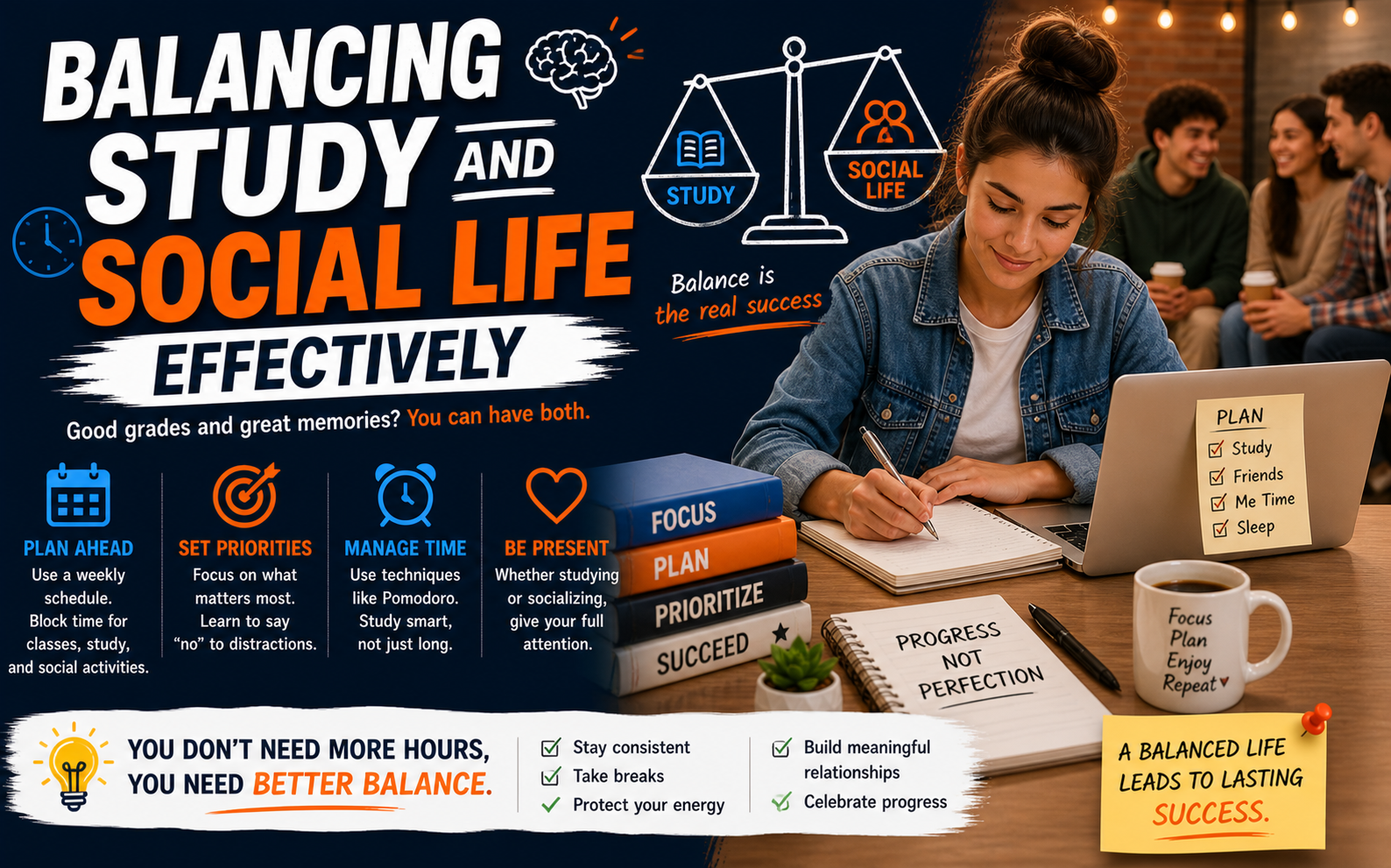
Master Your Schedule, Master Your Life: Balancing Study and Social Life
Discover how to excel in your academics without sacrificing the memorable experiences of your college years.
Juggling textbooks and social events can feel like a circus act, leaving many students overwhelmed and exhausted. But what if you could ace your exams and still enjoy a thriving social life without the constant stress?
The quintessential college experience is often depicted as a blend of late-night study sessions in the library and unforgettable moments with friends. However, striking a healthy balance between academic commitments and social activities is a challenge many students face. The pressure to succeed academically can often lead to social isolation, while a packed social calendar can cause grades to slip. This guide is designed to provide you with actionable strategies to harmonize these two critical aspects of student life.
Effective time management, setting clear priorities, and learning to say 'no' are not just buzzwords; they are the foundational pillars of a well-rounded and successful academic journey. By implementing the right techniques, you can reduce stress, improve your academic performance, and cultivate a fulfilling social life. Let's explore how you can take control of your schedule and make the most of your time in college.
75%
of students feel stressed about balance
8-10
weekly social hours recommended
20%
grade improvement with time management
The Myth of the 'Perfect' Balance
First, let's dispel a common misconception. Achieving a "perfect" 50/50 split between studying and socializing every single day is unrealistic and often counterproductive. The ideal balance is dynamic and will shift based on your academic calendar. During midterm or finals week, your focus will naturally tilt heavily towards your studies. Conversely, during lighter academic periods or holidays, you'll have more freedom to socialize.
The key isn't to maintain a rigid, unchanging schedule but to be flexible and intentional with your time. It’s about making conscious choices about your priorities on a weekly or even daily basis. Understanding that your balance is fluid will relieve the pressure of trying to do everything at once and help you focus on what's most important at any given moment. This mindset shift is the first step toward a less stressful, more productive student life.
The Flexibility Mindset: Acknowledge that your priorities will change week to week. Embrace a fluid schedule that adapts to exam periods and social opportunities, rather than striving for a rigid, perfect balance every day.
Feeling Overwhelmed by Your Schedule?
Our academic experts can help you build a personalized study plan.
Time Management Techniques That Actually Work
A vague plan to "study more" is destined to fail. To effectively manage your time, you need a concrete system. One of the most popular and effective methods is time blocking. This involves scheduling specific "blocks" of time for every task in your calendar, including classes, study sessions, meals, exercise, and social events. By assigning every hour of your day a purpose, you eliminate ambiguity and are less likely to procrastinate.
Another powerful tool is the Pomodoro Technique. This method involves studying in focused 25-minute intervals, separated by short 5-minute breaks. After four "Pomodoros," you take a longer break of 15-30 minutes. This technique helps maintain high concentration levels, prevents mental fatigue, and makes daunting study sessions feel much more manageable. Combining time blocking with the Pomodoro Technique can revolutionize your productivity.
⏱️
Prioritize Ruthlessly
Use tools like the Eisenhower Matrix to separate urgent/important tasks from distractions.
✓
Schedule Social Time
Treat social events like appointments to ensure they don't get consistently pushed aside.
✎
Plan Weekly
Set aside one hour each Sunday to plan your upcoming week, setting clear academic and social goals.
✦
Combine Activities
Study with a small group or go to the gym with a friend to blend social time with other tasks.
The Art of Saying 'No' Without Guilt
One of the biggest challenges in balancing study and social life is the fear of missing out (FOMO). It's tempting to say 'yes' to every invitation, but this can quickly lead to burnout and neglected responsibilities. Learning to politely decline invitations is a crucial skill for protecting your time and energy. You don't need a detailed excuse; a simple "Thanks so much for the invite, but I can't make it tonight!" is perfectly acceptable.
Remember that saying 'no' to one thing allows you to say 'yes' to something more important, whether that's a critical study session for an upcoming exam or a much-needed night of rest. Your friends will understand that you have academic commitments. Prioritizing your well-being and academic success isn't selfish; it's essential for long-term success and happiness.
"I was constantly stressed, feeling like I was failing at both my studies and my social life. Learning to time-block my weeks was a game-changer. I started scheduling my study sessions *and* my nights out, and suddenly everything felt manageable. My grades went up, and I actually enjoyed my free time more because it was guilt-free."
Keith, University Student
Don't Let FOMO Derail Your Grades.
We can help you focus on what matters most.
How It Works: A 4-Step Weekly Plan
1
Analyze Your Tasks
On Sunday, list all academic deadlines, personal appointments, and social events for the week ahead.
2
Block Your Priorities
Schedule your non-negotiables first: classes, study sessions for key subjects, and work shifts.
3
Schedule Flex Time
Intentionally add blocks for social activities, exercise, and relaxation. Don't overschedule.
4
Review and Adjust
At the end of each day, take 5 minutes to review your progress and adjust the next day's plan as needed.
Quality Over Quantity in Socializing
A fulfilling social life isn't about attending every party. It's about nurturing meaningful connections. Focus on quality interactions over the sheer quantity of events. A quiet coffee with a close friend or a small group dinner can be more restorative and enjoyable than a loud, crowded party. Be intentional about who you spend your limited free time with. Invest in relationships that energize and support you, rather than drain you. This approach not only makes your social life more rewarding but also makes it easier to manage alongside a demanding academic schedule.
Be Present: When you're studying, focus only on studying. When you're with friends, put your phone and academic worries away. Being fully present in each activity makes both more effective and enjoyable.
Ready to Build a Balanced Student Life?
Stop choosing between your grades and your social life. Get the expert support you need to thrive in both.